INDICATIONS & USAGE
Fenoprofen calcium is indicated for:
- Relief of mild to moderate pain in adults
- Relief of the signs and symptoms of rheumatoid arthritis
- Relief of the signs and symptoms of osteoarthritis
DOSAGE AND ADMINISTRATION
General Dosing Instructions
Use the lowest effective dose for the shortest duration consistent with individual patient treatment goals. Fenoprofen may be administered with meals or with milk. Although the total amount absorbed is not affected, peak blood levels are delayed and diminished.
Analgesia
For the treatment of mild to moderate pain, the recommended dosage is 200 mg given orally every 4 to 6 hours, as needed.
Rheumatoid Arthritis and Osteoarthritis
For the relief of signs and symptoms of rheumatoid arthritis or osteoarthritis the recommended dose is 400 to 600 mg given orally, 3 or 4 times a day. The dose should be tailored to the needs of the patient and may be increased or decreased depending on the severity of the symptoms. Total daily dosage should not exceed 3,200 mg.
CONTRAINDICATIONS
- Known hypersensitivity (anaphylactic reactions, serious skin reactions) to fenoprofen or any components of the drug product
- History of asthma, urticaria, or other allergic-type reactions after taking aspirin or other NSAIDs
- In the setting of CABG surgery
WARNINGS AND PRECAUTIONS
- Hepatotoxicity: Inform patients of warning signs and symptoms of hepatotoxicity. Discontinue if abnormal liver tests persist or worsen or if clinical signs and symptoms of liver disease develop
- Hypertension: Patients taking some antihypertensive medications may have impaired response to these therapies when taking NSAIDs. Monitor blood pressure
- Heart Failure and Edema: Avoid use in patients with severe heart failure unless benefits are expected to outweigh risk of worsening heart failure
- Renal Toxicity and Hyperkalemia: Monitor renal function in patients with renal or hepatic impairment, heart failure, dehydration, or hypovolemia. Avoid use in patients with advanced renal disease unless benefits are expected to outweigh risk of worsening renal function
- Anaphylactic Reactions: Seek emergency help if an anaphylactic reaction occurs
- Exacerbation of Asthma Related to Aspirin Sensitivity: Contraindicated in patients with aspirin-sensitive asthma. Monitor patients with preexisting asthma (without aspirin sensitivity)
- Serious Skin Reactions: Discontinue at first appearance of skin rash or other signs of hypersensitivity
- Drug Reaction with Eosinophilia and Systemic Symptoms (DRESS): Discontinue and evaluate clinically
- Fetal Toxicity: Limit use of NSAIDs between about 20 to 30 weeks in pregnancy due to the risk of oligohydramnios/fetal renal dysfunction. Avoid use at about 30 weeks gestation and later due to the risks of oligohydramnios/fetal renal dysfunction and premature closure of the fetal ductus arteriosus
- Hematologic Toxicity: Monitor hemoglobin or hematocrit in patients with any signs or symptoms of anemia
- Masking of Inflammation and Fever: Reduced inflammation, and possibly fever, may diminish the utility of these diagnostic signs
- Ocular Effects: Discontinue and perform an ophthalmologic examination if visual disturbances occur
- Central Nervous System Effects: Caution patients who experience drowsiness, dizziness, or depression about activities requiring alertness
- Hearing Impairment: Perform periodic auditory testing during prolonged therapy
ADVERSE REACTIONS
The following adverse reactions are discussed in greater detail in other sections of the labeling:
- Cardiovascular Thrombotic Events
- GI Bleeding, Ulceration and Perforation
- Hepatotoxicity
- Hypertension
- Heart Failure and Edema
- Renal Toxicity and Hyperkalemia
- Anaphylactic Reactions
- Serious Skin Reactions
- Hematologic Toxicity
To report SUSPECTED ADVERSE REACTIONS, contact FDA at 1-800-FDA-1088 or www.fda.gov/medwatch
HOW SUPPLIED / STORAGE AND HANDLING
The 300 mg capsule is a size “0el” hard gelatin capsule with a brown opaque cap imprinted with “FENO 300” in black and a yellow opaque body imprinted with “ZN07” in black, filled with white to off-white granular powder.
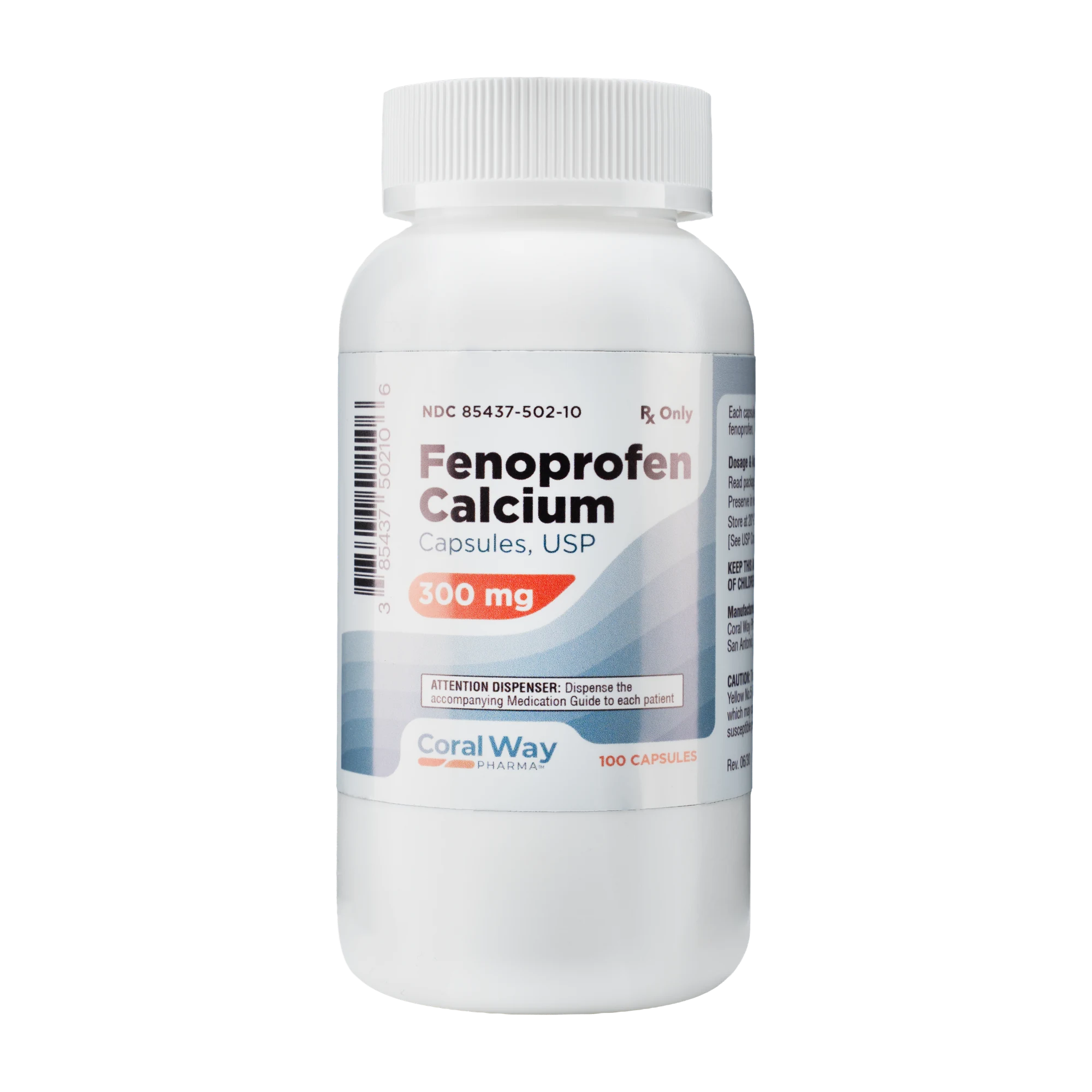
- NDC 85437-502-10 — Bottles of 100
Store at room temperature 20° to 25°C (68° to 77°F); excursions permitted between 15° to 30°C (59° to 86°F) [see USP Controlled Room Temperature]. Preserve in well-closed containers.
Full Prescribing Information: DailyMed